
Progressive Tree Service Chicago
Chicago Tree Removal, Tree Trimming & Tree Service
Tree Removal • Tree Trimming • Emergency Services • Stump Grinding
⭐ Top Rated: 4.8 out of 5 on 104 Google reviews (Evanston profile) • 24/7 Emergency Tree Service • ISA Certified Arborists • Licensed, Bonded & Insured • Free Estimates ⭐
Locations in Chicago (Lakeview) & Evanston • Serving Chicago's North Side & the North Shore
Progressive Tree Service is a Chicago tree service company for tree removal, tree trimming and 24/7 emergency tree work, with a location in Lakeview and ISA Certified Arborists on staff. We are licensed, bonded and insured, and every job starts with a free estimate.
We have 10+ years of tree care in Evanston and on the North Shore, and locations in Evanston and Chicago (Lakeview). On Chicago's North Side, our ISA Certified Arborists handle tree removal, tree trimming, stump grinding and 24/7 emergency tree service for property owners, property managers and HOAs. If a job may need a Bureau of Forestry permit, mention it when you call. For a tree emergency, call (847) 530-1533 any hour; for planned work, ask for a free estimate.
Tree Removal in Chicago
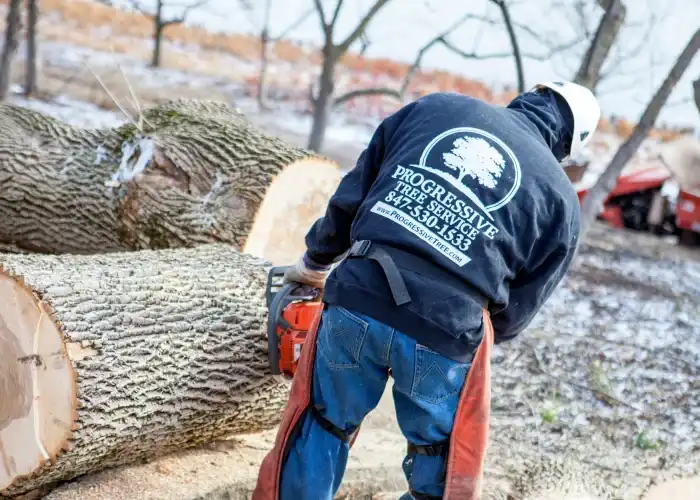
Progressive Tree Service provides tree removal in Chicago by ISA Certified Arborists: complete, whole-tree removal of dead, diseased, storm-damaged and hazardous trees for property owners, property managers and HOAs on the North Side. The International Society of Arboriculture (ISA) calls removal a last resort, for a tree that is dead, dying or irreparably hazardous, or one crowding and harming other trees in a way pruning cannot correct. So if trimming can keep your tree, we will tell you.
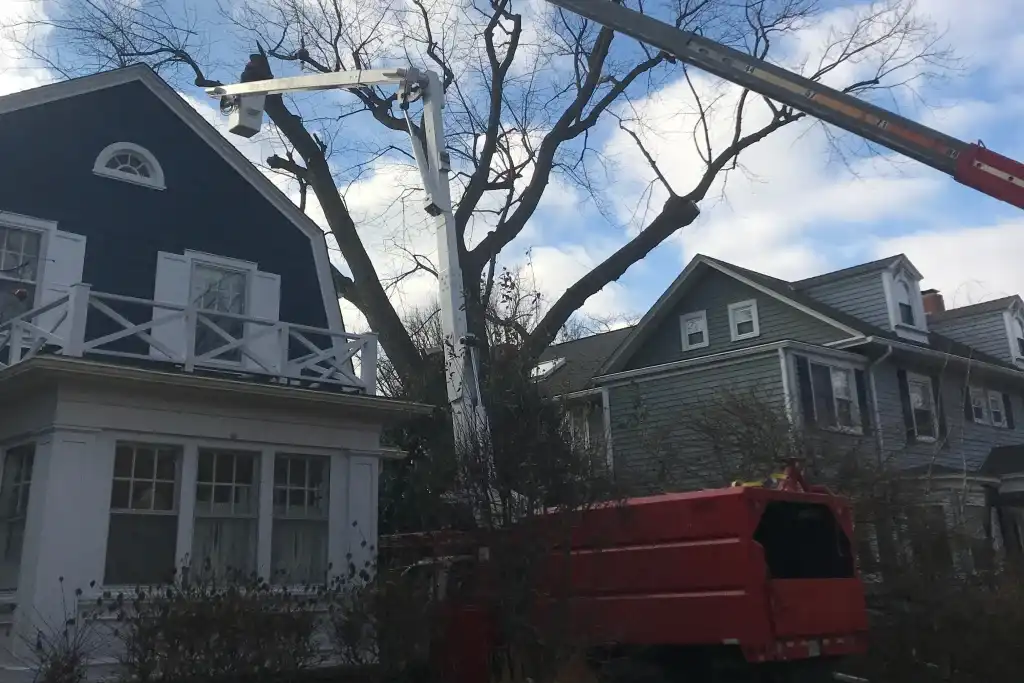
What our tree removal service covers:
- Removal of dead, diseased or storm-damaged trees
- Hazardous limb and branch removal
- Emergency response for fallen trees and dangerous limbs, 24/7
- Stump grinding after the removal, or for an old stump
- Licensed, bonded and insured
Ask what cleanup and wood hauling your estimate includes.
Get a free tree removal estimate
Dead, Hazardous and Storm-Damaged Trees
A dead or damaged tree should come down before it falls on its own. The Tree Care Industry Association warns that a dead or dying tree is often decaying from the inside out, which makes it extremely unstable, and that once a tree starts falling, no one controls where it goes. In Chicago, ash is the common case: University of Illinois Extension notes that ash trees become brittle and hazardous fairly soon after dying, a risk to owners, neighbors and people on the sidewalk. ISA suggests asking: are there large dead branches, detached hanging branches, or cracks or splits in the trunk or where branches are attached?
Planning a Removal Around Trees You're Keeping
A good removal plan protects what stays. The Morton Arboretum notes that tree roots are concentrated in the top several inches of soil and spread at least as far as the branches, often much farther, so heavy traffic near a tree you want to keep can harm it. Timing helps too: University of Illinois Extension explains that removal is easier when trees are dormant, because with no leaves the cuts are more visible, the limbs are easier to handle, and the dormant landscape around the base is less likely to be damaged. If an arborist confirms your tree can safely wait, winter is worth considering.
Tree Trimming and Pruning in Chicago
Our tree trimming and pruning in Chicago covers shaping, crown work and cabling and bracing, timed to the species and the season. Pruning out dead, diseased, crossing or rubbing branches can make a tree safer without taking it down. Pruning near power lines is different: ComEd says pruning trees around power lines should only be attempted by line-clearance trained professionals, and asks you to contact ComEd before planning any tree trimming work near electrical equipment.
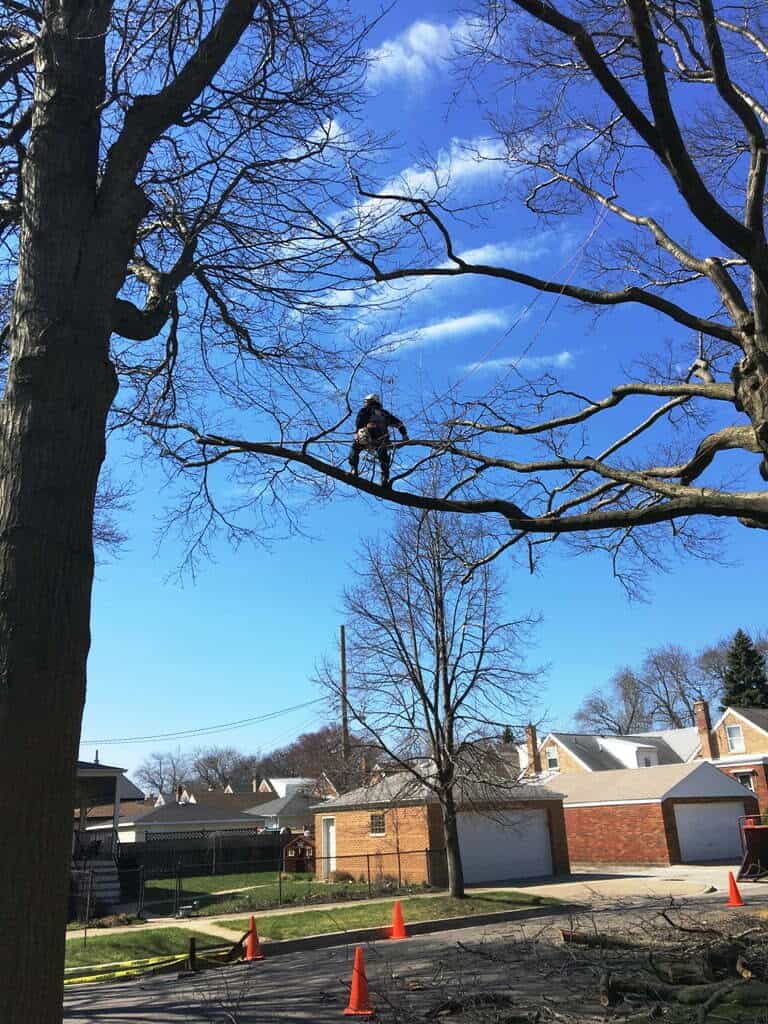
When is the best time to prune a tree in Chicago
For many trees the dormant season is a good time to prune, but the right timing depends on the species and how urgent the pruning is. The Morton Arboretum's garden calendar gives the local rules:
- The dormant season is a good time to prune many species.
- Don't prune spring-flowering plants until after they flower, or you will remove this year's flower buds.
- Prune oaks and elms from about mid-October through mid-April, when the insects that spread oak wilt and Dutch elm disease are dormant; fresh cuts during the growing season can attract them.
- Prune birch, maple and walnut during the coldest part of winter, because they bleed sap if pruned as temperatures warm; otherwise wait until very early summer, when all the leaves have expanded.
- Evergreen shrubs can be pruned just before new growth begins, when the buds start to swell.
- Dead, diseased, crossing or rubbing branches can be pruned anytime.
Some work can't wait for the right season. A cracked branch that might fall, or one hanging over power lines, has to come off now, and storm-damaged limbs should be pruned promptly (The Morton Arboretum).
How a Tree Job Works, From Free Estimate to Stump
Here is how to get started, from your first call to the stump.
- Tell us about the tree. Call (847) 530-1533 or request a quote: tell us the address and what the tree is doing.
- Free estimate. Every job starts with a free estimate; ask us to walk you through how the price for your job is built. Our ISA Certified Arborists bring the expertise to make the call on what is unsafe now and what can wait.
- Permits. If the tree is a City parkway tree or the job may need a Bureau of Forestry permit, mention it when you call.
- The stump. Add stump grinding if you want the stump gone, and ask what clean-up your estimate includes.
Need it sooner? Call us to discuss same-day and rush availability — not every job needs it, but we'll see what we can do.
Stump Grinding After a Tree Removal
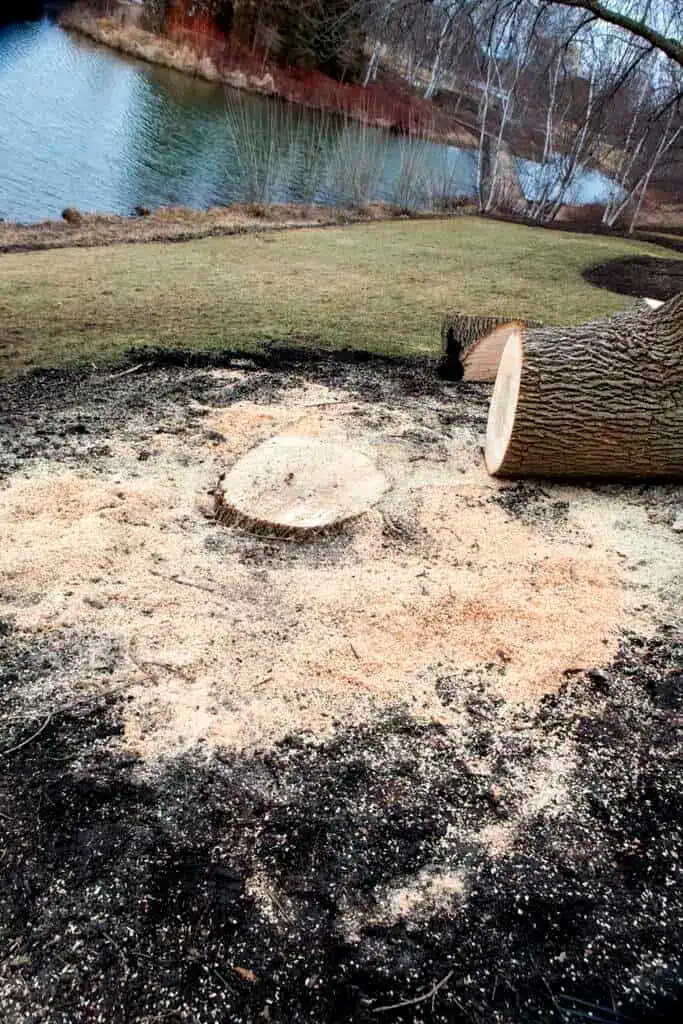
We offer stump grinding after a tree removal or for an existing stump. Grinding takes the stump down below the surface and leaves the roots in the ground, and the grindings are wood chips you can use as mulch. Ask us to include stump grinding in your estimate.
24/7 Emergency Tree Service for Storm Damage and Fallen Trees
Tree down or a limb on the house right now? Call (847) 530-1533 any hour. We'll tell you what we can get to tonight and what has to wait for daylight. Our 24/7 emergency tree service covers storm-damaged trees, fallen tree removal, hazardous limb removal and emergency tree cutting. If the fallen tree is a City parkway tree, call 311, for example for a parkway tree blocking the street, sidewalk or alley, or one on a car, house or garage. The Bureau of Forestry says trees that constitute an emergency are removed immediately.
If wires are down, keep everyone far away from them, no matter how safe they look. Call 911 if anyone is hurt or trapped, then call ComEd at (800) EDISON-1. More on what to do: 24/7 emergency tree service.
Tree Health: Inspections, Pests and Disease in Chicago
Not every struggling tree needs to come down. Our ISA Certified Arborists provide professional tree inspections and risk assessments, tree disease management, tree pest control and insect management, tree fertilization and tree care planning.
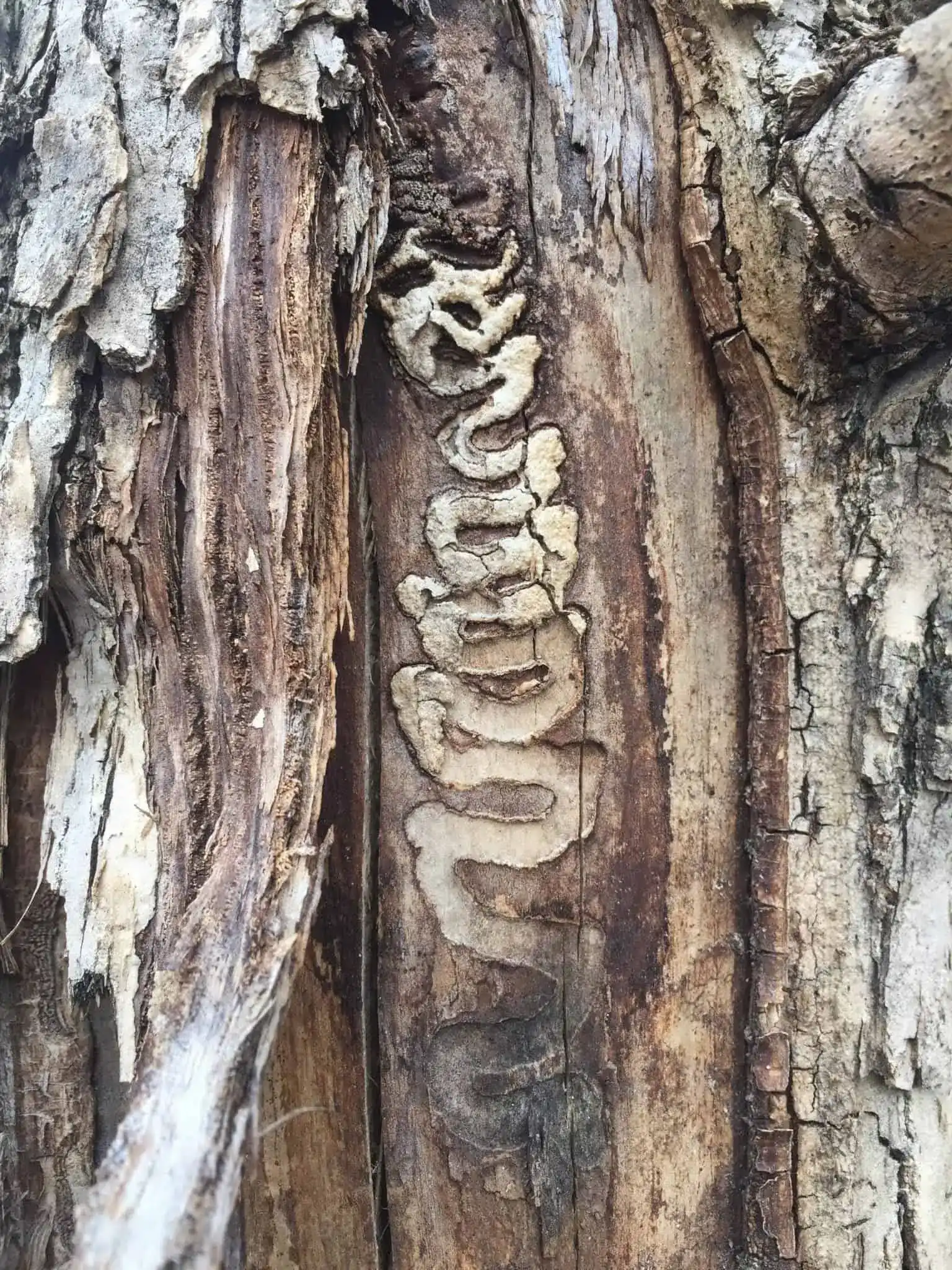
Ash is the tree to watch in Chicago's urban forest. The City says ash makes up around 17% of its street trees, about 85,000 trees, and it tells owners of ash trees on private property to consult an ISA certified arborist and to call 311 if they suspect the invasive emerald ash borer. University of Illinois Extension lists the most obvious signs as dieback from the top of the tree and lots of small leafy shoots sprouting from the trunk, along with woodpecker damage and distinctive D-shaped exit holes. It notes that most infested trees die in two to five years. Read more about EAB prevention and management.
Professional Tree Cutting Service on Chicago's North Side
Our Chicago location is in Lakeview, and our tree cutting, tree removal and trimming crews work across Chicago's North Side. We have local pages for Lincoln Square, Edgewater, Rogers Park, Albany Park, Irving Park, Avondale, North Park, Jefferson Park, Forest Glen and Streeterville. We also provide commercial tree service for property managers, HOAs and businesses.
Our Chicago location: Progressive Tree Service, 1015 W Oakdale Ave, Chicago, IL 60657 · (847) 530-1533. Office visits by appointment. See it on Google Maps.
We have locations in Evanston and Chicago (Lakeview) and work across the North Shore and Chicago's North Side — tell us your address and we'll confirm whether we cover it.
Looking for local details? We also have pages for Skokie tree service, finding an arborist in Winnetka, tree service in Lake Bluff and Vernon Hills tree service.
Who Handles Which Tree in Chicago
Who removes or trims a Chicago tree, and which rules apply, depends on where the trunk stands: in the parkway, on your own property, or on or near the property line.
Removing a tree that is in a Chicago parkway
A parkway tree is public property, so you ask the City to remove it: call 311 or submit a service request online. Chicago has more than 500,000 parkway trees, each maintained by the Department of Streets and Sanitation Bureau of Forestry, which coordinates the removal of dead or damaged trees in the public way. Trees that constitute an emergency are removed immediately, and, in the Bureau's words, "trees that conflict with utilities are removed at the bureau's discretion."
Free tree removal in Chicago? What the City covers
The Bureau of Forestry coordinates the removal of parkway trees and trees in the public way that are dead or damaged; request it through 311 or a service request online. For ash trees on private property, the City points owners to an ISA certified arborist.
City of Chicago tree trimming requests and schedule
The City trims parkway trees area by area. The Bureau of Forestry says it has the capacity to run a citywide area tree trimming program beginning spring 2023, with crews trimming all the trees in one area at the same time. Its goal is to work weekly in every ward during the trimming season, generally April to December, barring emergency weather, and trees are posted with signs in advance, much like street sweeping. For a tree emergency, such as a parkway tree blocking the street, sidewalk or alley, or one on a car, house or garage, call 311.
City pickup for branches and tree debris
For branch removal after trimming or a storm, the City's Tree Debris Removal service picks up piles of branches or bushes. Request it through 311; the branches must be neatly stacked in the alley or City parkway near the curb, and a pile that blocks a street, sidewalk or alley can draw a sanitation code ticket.
Hiring your own tree service for a parkway tree
If you'd rather not wait for the City, or want work the Bureau of Forestry doesn't do, the permit goes to a tree company, not to you: the City says only tree service companies will be issued permits to work on trees. For a parkway tree work permit, the Bureau of Forestry requires the company's Certificate of Liability Insurance naming the City of Chicago as additional insured, with at least $1,000,000 general liability per occurrence. It asks for at least 24 hours' notice per request and 10 working days for removal requests, and a copy of the permit must remain in the company's vehicle. First-time applicants may be asked for financial records, equipment lists and references. When a street tree has to come out for construction, the City issues a Tree Removal Permit only if all reasonable efforts were made to preserve it, and replacement trees or compensation for lost value may be required. Permit questions go to a City Forester at the Bureau of Forestry, 312.746.5254.
Call (847) 530-1533Get a free estimate
Removing or trimming a tree on your Chicago property
A tree on your own property is yours to look after: ISA says it is a tree owner's responsibility to ensure the safety of others around trees on their property. Whether private tree work needs a City permit is not spelled out on the City's permit page, which asks every applicant whether the work is on public or private property, so check with a City Forester if you're unsure.
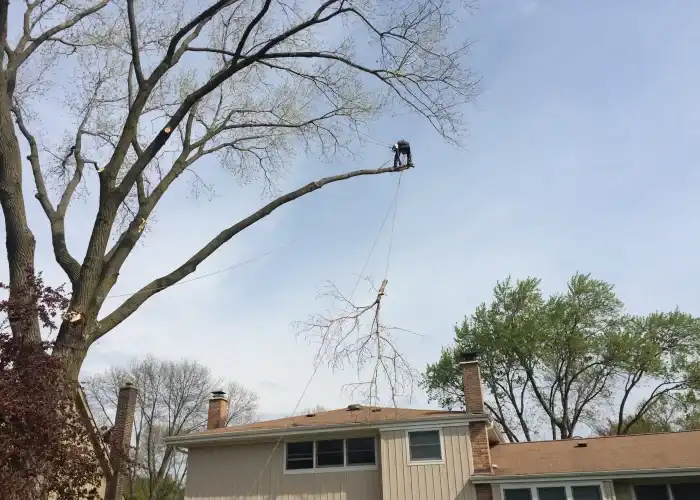
Before you hire a tree contractor, ask a few questions:
- Is there an ISA Certified Arborist on the job? A certified arborist can tell if the tree has damage that is not visible, and from that assessment decide how to trim it, where to cut and how to keep people and property safe.
- Can they prove they're insured? Ask for the certificate of insurance. The Tree Care Industry Association says the only way to be sure a certificate is legitimate is to call the insurance agent or agency listed on it.
- Will they put it in writing? ISA recommends getting more than one estimate and not always accepting the lowest bid. The Morton Arboretum adds: get everything detailed in writing, and never pay in advance.
- Is removal really necessary? ISA calls removal a last resort. A tree with a problem can sometimes be kept through tree trimming or treatment.
- If they remove the tree, will they grind the stump, and what cleanup is included?
Our estimate is free: tell us the address and what the tree is doing and we'll take it from there.
Tree Is On Neighbor's Property
Can you make your Chicago neighbor trim his tree?
Usually not, if the tree is healthy and its whole trunk is on your neighbor's land: it is your neighbor's tree. Illinois courts look to where the trunk stands, not to its roots or branches, when deciding whose tree it is (Ridge v. Blaha, 1988). If the tree looks dead or dangerous, tell your neighbor, ideally in writing. If a dead or poorly maintained tree later falls on your home and the neighbor was negligent, your insurer may try to recover the cost from the neighbor's insurer.
Be careful about cutting overgrown branches yourself. Under Illinois' Wrongful Tree Cutting Act, anyone who intentionally or knowingly cuts a tree they did not have the legal right to cut must pay the owner 3 times its stumpage value. Talk to your neighbor before any work on their tree, get written consent, and ask whether they will share the cost.
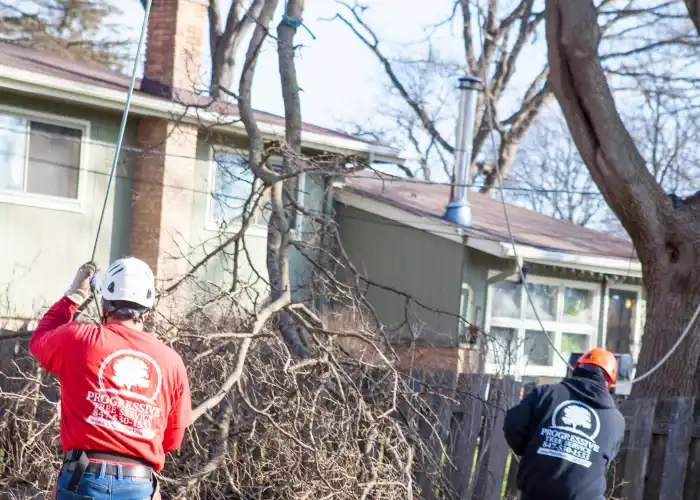
Can I Cut A Tree That Is On The Property Line?
Not without your neighbor's permission if any part of the trunk crosses the line. In Ridge v. Blaha (1988), an Illinois appeals court held that a tree standing on the division line is the common property of both owners. Where the trunk emerges from the ground decides it: in that case, a trunk extending a little over four inches onto one lot was enough. Roots alone crossing the line do not make a tree shared.
Cutting a neighbor's roots is riskier than trimming branches, because roots anchor and feed the tree. Talk to an arborist and your neighbor before cutting roots near the line.
It is always best to consult a Chicago attorney if you are not 100% sure about the governing laws. Local laws and regulation may change without notice.
Removing your neighbor's fallen tree from your property
Start with your own homeowners insurance. If a neighbor's tree falls and damages your home, your own policy may cover it, minus your deductible; if the tree was dead or poorly maintained and your neighbor was negligent, your insurer may try to recover the cost from the neighbor's insurer through subrogation (Iowa Insurance Division).
Here is what you should do in such a case:
- take plenty of pictures before anything is moved
- call your homeowner's insurance and ask what your policy covers; if the tree fell without damaging anything insured, removal may not be covered
- if wires are down, stay far away and call ComEd; call 911 if anyone is hurt or trapped
- call an emergency tree removal service
- after the tree is removed, deal with the rest of the damage
It is usually not a good idea to cut up the tree yourself. The Tree Care Industry Association says homeowners should never attempt their own tree removal, and a tree brought down by a storm or high winds adds hazards of its own, from branches or the whole tree springing up after a section is cut to hidden power lines.
Call (847) 530-1533Get a free estimate
Common Questions About Tree Services
What's the typical price for cutting down a tree?
It depends on the tree and the site: height, trunk diameter, how close the tree sits to your house or power lines, how the crew can reach it, the season (a full summer canopy is more to handle than bare winter limbs), and whether you want the stump ground. Storm damage and emergency work is usually harder and more dangerous. Every job starts with a free estimate; ask us to walk you through how the price for your job is built.
How long does the work usually take?
Trimming is usually quicker than a full removal, and the rest depends on the tree and its surroundings. A small ornamental tree in an open yard is a short job, while a large tree over a roof, near power lines or in a tight yard takes longer, and grinding the stump adds time. Emergency work deals with the immediate danger first, and some of it has to wait for daylight. Ask us about timing for your job when you call.
Will insurance cover this expense?
Often, if the tree fell and damaged an insured structure. When the fall is sudden and accidental and caused by a covered peril such as wind, hail, lightning or the weight of ice or snow, a homeowners policy may pay for structural repairs and for removing the tree, typically up to a dollar amount set by the policy. If the tree fell without causing damage, removal may not be covered, and a claim may be denied if the tree fell from neglect, disease or rot that was known beforehand (Iowa Insurance Division). Ask your carrier what your policy pays for debris removal and whether there is a separate limit for trees and shrubs before you book the work, and photograph everything before any cleanup.
Are you licensed, bonded and insured?
Yes. Progressive Tree Service is licensed, bonded and insured, with ISA Certified Arborists on staff. Before any tree company starts work on your property, ask it for proof of insurance.
Who do I call to remove a fallen tree in Chicago?
It depends on where the tree stands. For a parkway tree or another tree in the public way, call 311 or submit a service request online; the Bureau of Forestry coordinates the removal of dead or damaged public-way trees. For a tree on your own property, call us at (847) 530-1533 any hour; we'll tell you what we can get to tonight and what has to wait for daylight. Keep away from downed wires and call ComEd, and call 911 if people are in immediate danger.
How much does tree trimming cost in Chicago?
It depends on the tree: its size, how much needs to come off, how close it is to your house or power lines, and how the crew can reach it. Every job starts with a free estimate; ask us to walk you through how the price for your job is built.
Do I need a permit to remove a tree in Chicago?
Ask the City before you book. The Bureau of Forestry says to contact a City Forester for all permits, at 312.746.5254. If your job might need one, mention it when you call us.
What months should you not trim trees?
Avoid late summer: The Morton Arboretum says pruning in August and September should be avoided. For most deciduous trees, it says the best time to prune is between late fall, after the trees go dormant, and very early spring, and that oaks and elms should be pruned in the dormant season to avoid the insects that spread oak wilt and Dutch elm disease. A cracked or hanging branch shouldn't wait for the right month, so call us.
Is a tree service the same as an ISA Certified Arborist?
Not necessarily. ISA Certified Arborist is a credential: ISA requires at least three years of full-time arboriculture experience, or a combination of education and practical experience, to apply for the exam, and the certification is valid for three years before the arborist must recertify. Progressive Tree Service has ISA Certified Arborists on staff; ask any company who on its crew is certified.
Should I get multiple estimates?
Yes. ISA recommends getting more than one estimate and not always accepting the lowest bid, and The Morton Arboretum adds: get everything in writing and never pay in advance. Make sure removal is really necessary, since ISA calls it a last resort.
Watch for red flags: no proof of insurance, pressure to decide on the spot, or door-to-door offers after a storm. The Illinois Attorney General warns that "storm chasers" pressure people into quick and often expensive decisions about cleanup.
What about the stump?
Removing a tree leaves the stump unless you add stump grinding, which we offer after a removal or for an existing stump. Grinding takes the stump below the surface and leaves the roots in the ground, and the wood chips can be used as mulch. Some homeowners keep a stump as a garden feature or a seat instead.
Ready to get started? Call (847) 530-1533 or request a free estimate, and tell us the address and what the tree is doing.

You must be logged in to post a comment.